2026 Oct 2
Gotland Grand National: Three thousand riders all coming for the same thing
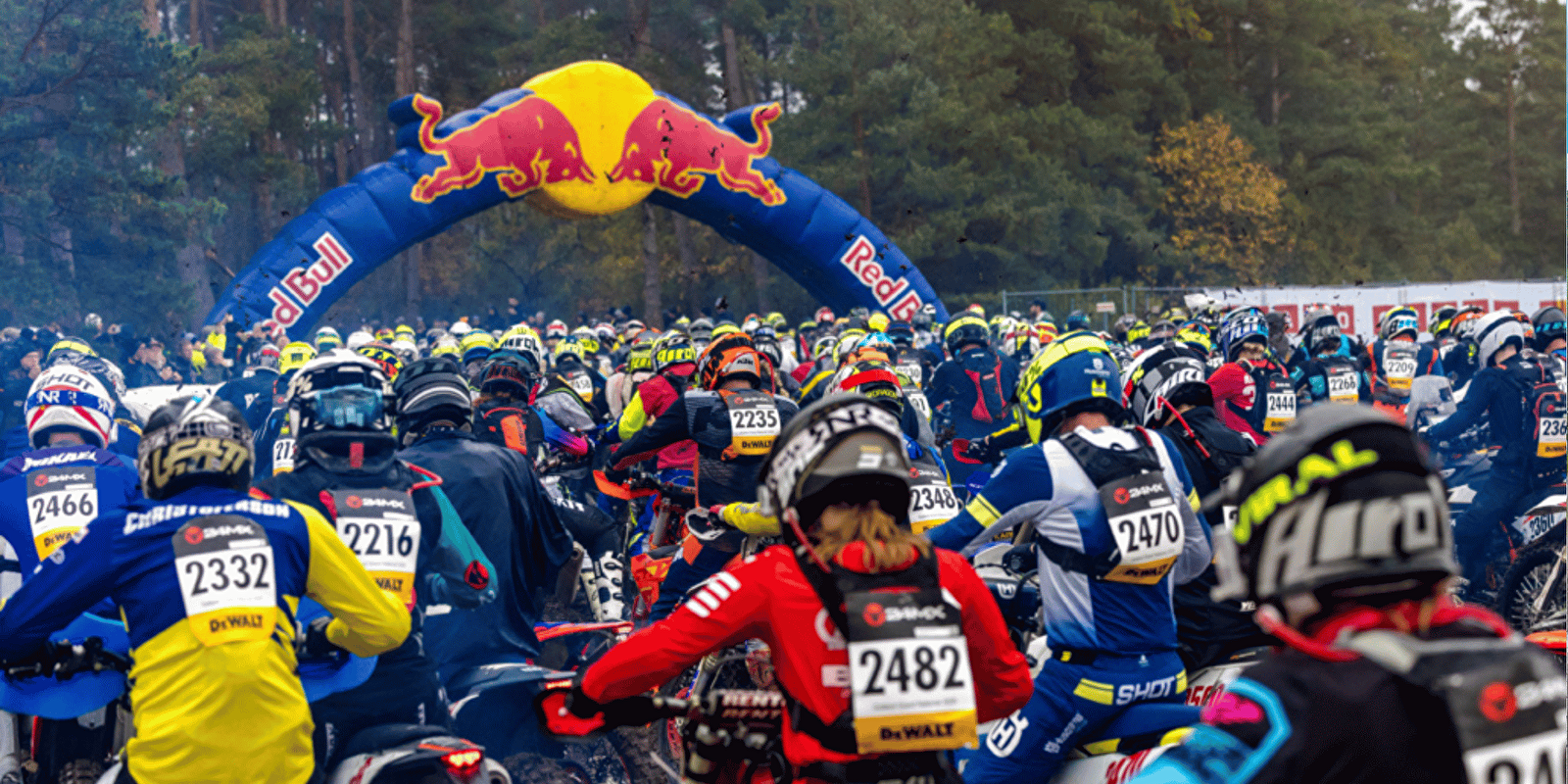
The Gotland Grand National is the largest enduro race on earth, and, through the eyes of anyone who makes motorcycle chains, one of the most interesting weekends of the year.
Every October, on a Baltic island of some sixty thousand people, around three thousand riders from fifteen-odd nations arrive to race motorcycles through the woods. The Gotland Grand National has been doing this since 1984. It is not a world championship round, it does not hand out FIM points, and yet it remains the biggest enduro race on the planet. Enough reason for us to give you an introduction before it all takes place again this October.
A start unlike anything else in motorcycling
Most races meter their riders out. GGN does not. The field is released together, thousands of engines at once, across open ground that narrows into a corner and then into forest. It has been called the craziest start in motorcycle racing, and the description is hard to argue with. From the first hundred meters the machinery is being asked to do something no test protocol ever asks of it: full load, cold, in a crowd, on churned ground. Good luck with that!
The headline classes then run for three hours. There is no parc fermé, no test-and-transfer rhythm, no chance to sit in a service area and take stock between special stages. In 2024 the winning ride was six laps and two pit stops in 3 hours 30 minutes. In 2025 it took 3 hours 41. That is a continuous duty cycle, and it is a very different thing from a world championship day.
Forty years, and a new home
For four decades the race was held at the Tofta shooting range on the west coast, think sandy soil over limestone bedrock, the sea within earshot, a 22-kilometre lap that forty years of racing had worn down to rock. The 40th edition in 2023 was the last one there; the Swedish Armed Forces needed the land back. Since 2024 the event has run at Hejdeby, outside Visby, on what the organisers call GGN 2.0: a new site, a 25-kilometre lap and, crucially, fresh, unconsolidated soil ready for another four decades. At least.
The character of the race changed with the ground. Tofta's defining hazard was rock. Hejdeby's is mud.
The year the island dissolved
Which brings us to 2025. Weeks of rain fell on a young course with no established base, and the result was the muddiest edition in the event's history, with machines buried to the seat, excavators pulling bikes out, some three hundred motorcycles recovered over two days. Organizers shortened the race mid-event and cut the lap requirement so that riders could finish at all. There were 429 retirements, against 63 the year before. It was not the first time: 2018 is still remembered for riders crossing the line as clay statues.
Gotland is not always like that. Other editions have been dry and fast on sand. Late-October Baltic weather is simply the largest unknown in the whole event, and nobody who enters gets to choose. And for some participants, this is part of what draws them to the event.
Why a chain manufacturer pays attention
Three hours of unbroken running through sand and water is close to a worst-case brief for a motorcycle chain, and it stacks several problems at once. Sand works like a grinding paste at the pin and bush. Mud packs into the sprocket teeth and pulls the chain out of line, adding tension the drivetrain was never meant to carry. Standing water washes lubricant off the rollers and leaves the sealing rings as the only thing holding grease inside the joint. Then it all runs for another two hours. Or more.
What makes GGN genuinely rare, though, is not the elite riders. It is everybody else. The entry runs from children on 50cc machines through age-banded recreational classes into the sixties, alongside veteran and pre-1974 classic bikes, an electric class and an adventure class. Most of those motorcycles were prepared in a home garage. The chains on them are of every brand, every specification and every stage of life, from brand new, half-worn, adjusted last night, adjusted last season. One afternoon at Gotland puts more variety of real-world chain condition under real-world load in front of you than a year of controlled testing ever will, and none of it is curated. That is the value. We watch the whole field, not one garage.
Everyone races
It is worth saying plainly what the entry list means. Around seven hundred volunteers from the island's sports clubs put the event on. The elite men's and women's winners are now paid the same. World-class names turn up and get beaten, or win, or get stuck like everyone else: Steve Holcombe finished second on debut in 2023 in the same year he took an EnduroGP world title, behind Albin Elowson; Pierre-Alexandre Renet won four in a row a decade earlier; Mats Nilsson holds the record with eight. And behind them, several thousand participants who will never win anything ride the same course on the same day.
Recent Gotland Grand National winners
Men
2025 Max Ahlin (SWE)
2024 Max Ahlin (SWE)
2023 Albin Elowson (SWE)
2022 Albin Elowson (SWE)
Women
Hedvig Malm (SWE)
Martine Hughes (NOR)
Linnéa Åkesson (SWE)
Tyra Bäckström (SWE)
Racing is where components stop being specifications and start being consequences. Gotland does that at a scale nothing else in the sport comes close to: a few thousand riders, one island, and whatever the Baltic decides to do that weekend. We will be there, notebook in hand, October 22.